What Problem Does This Solve?
In real systems, allowing unlimited requests from a single client can:
- • Overload your server
- • Cause unfair resource usage
- • Enable abuse (DDoS, brute force, scraping)
A rate limiter protects your service by controlling how many requests a client can make over time .
High-Level Architecture
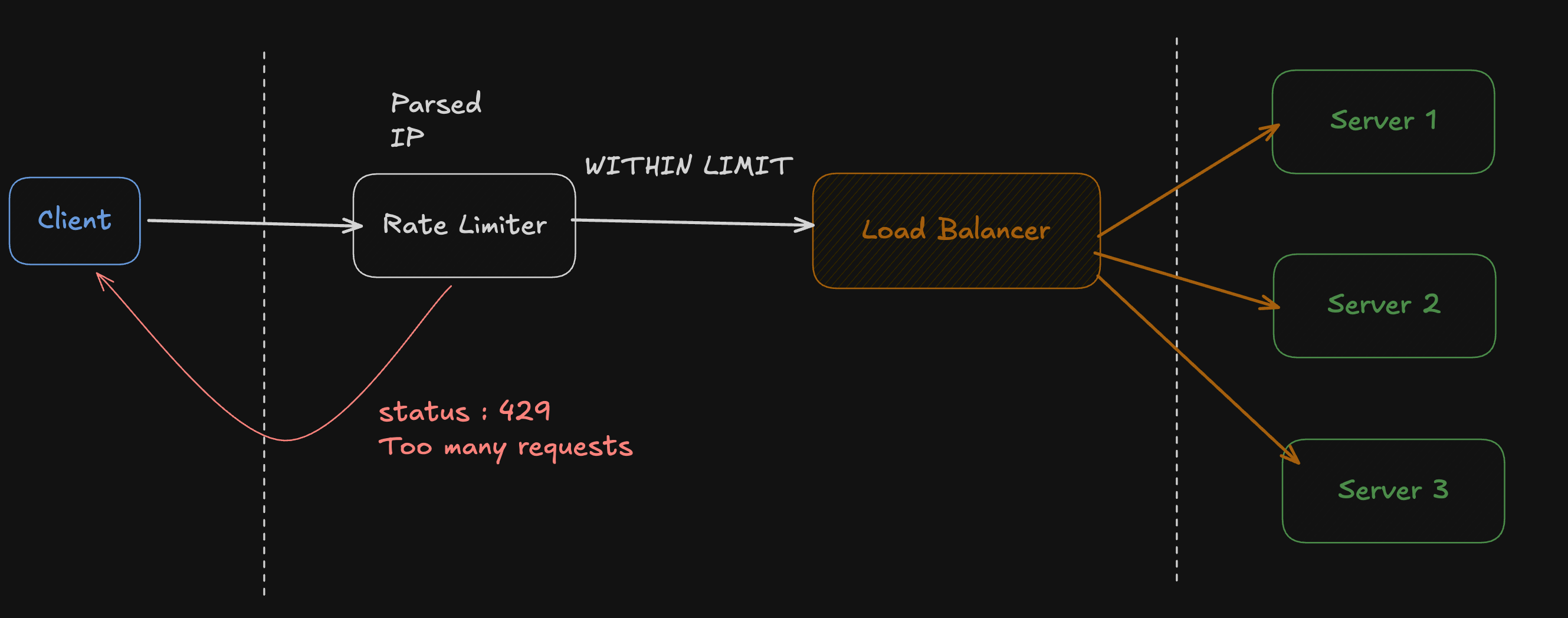
Core Concept: Token Bucket Algorithm
The rate limiter works using a token bucket algorithm where each client is assigned a bucket containing a fixed number of tokens. Every incoming request consumes one token from the bucket. Over time, tokens are replenished at a fixed interval defined by the refill rate. If a request arrives when the bucket has no available tokens, the request is rejected with an HTTP 429 “Too Many Requests” response; otherwise, the request is allowed to proceed to the service.
Important Components
1. Limiter
Manages all client buckets.
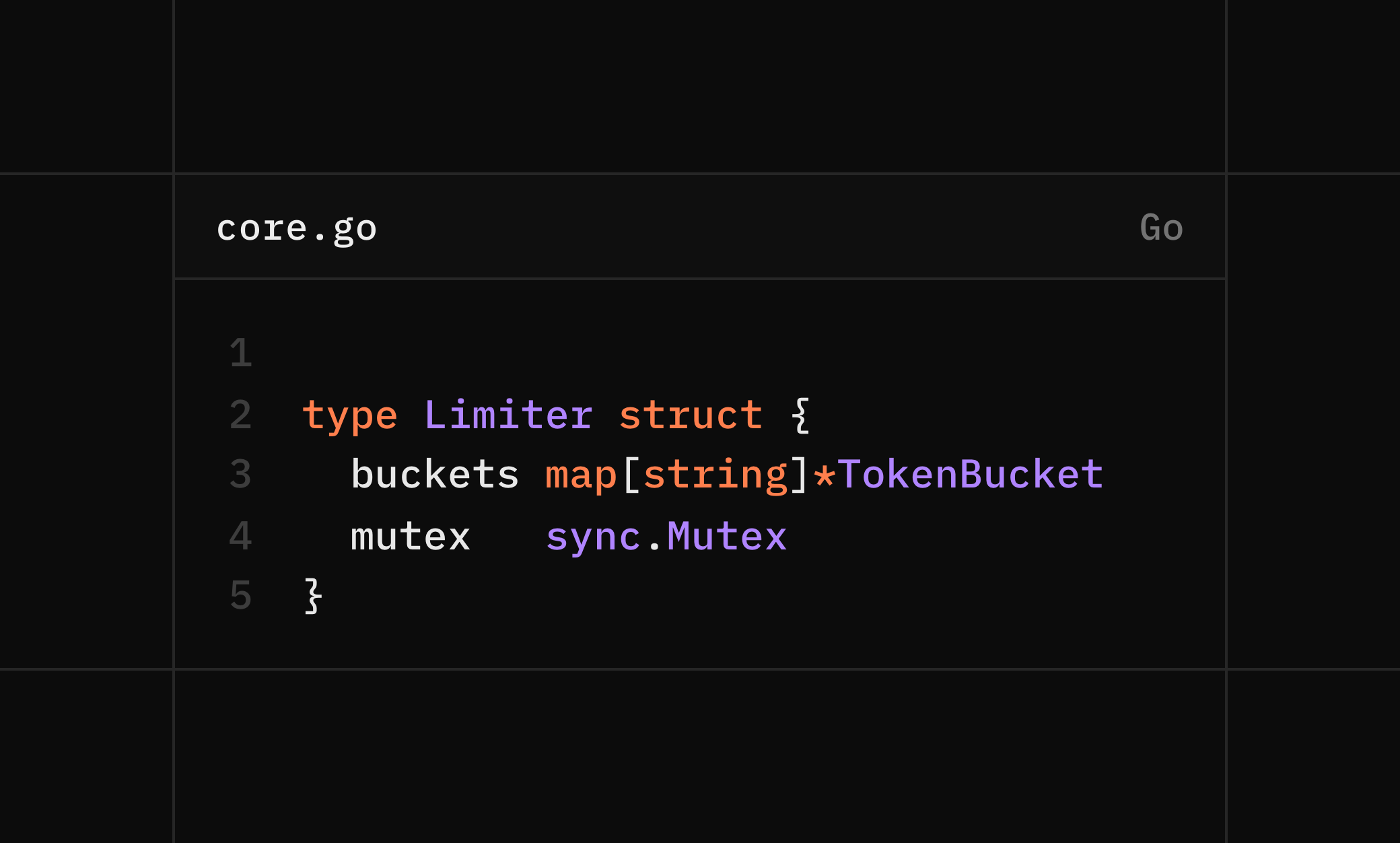
- • One bucket per client key (IP)
- • Thread-safe access
- • Responsible for bucket creation and cleanup
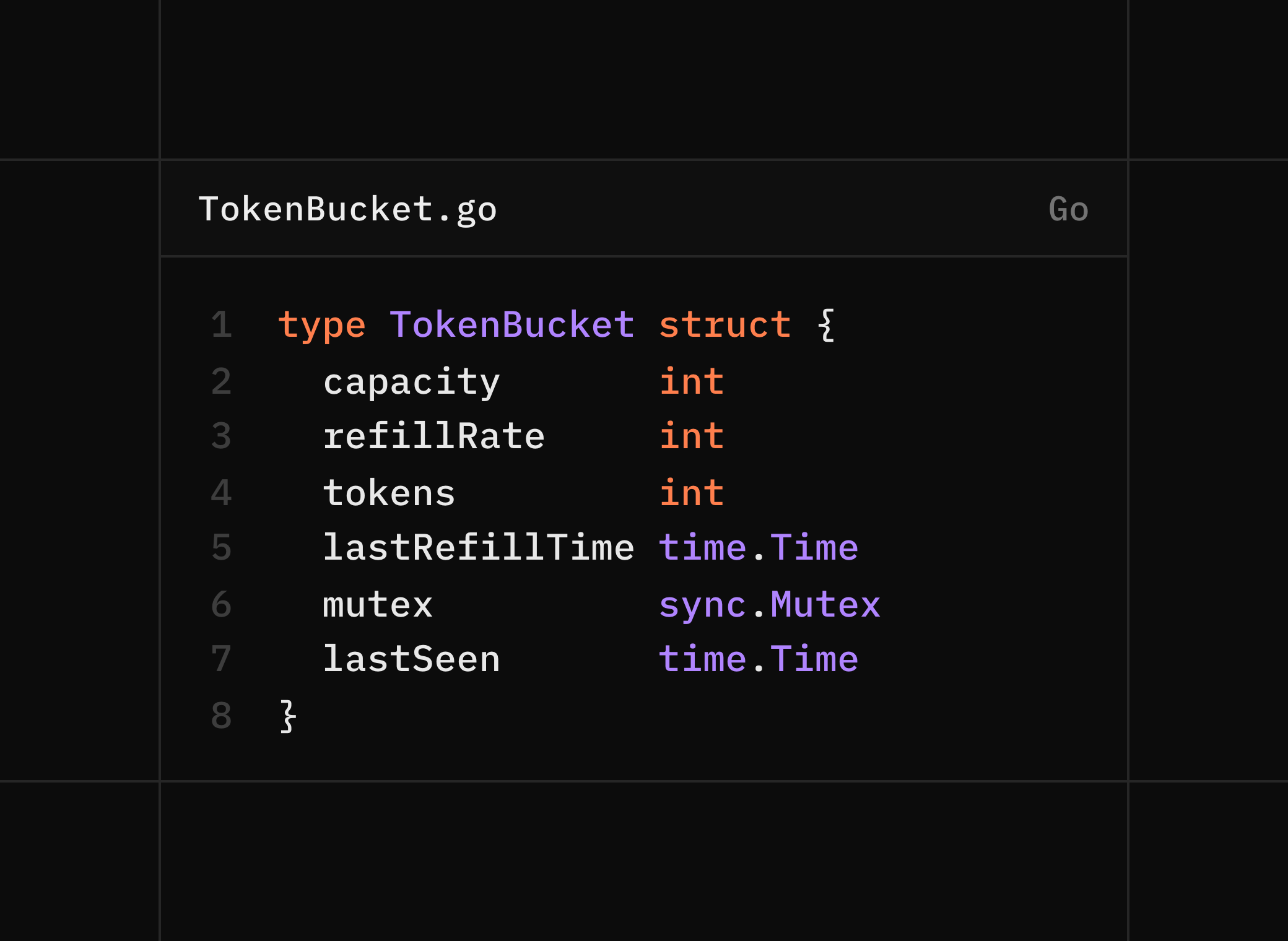
2. TokenBucket
Represents rate limits for a single client.
3. Middleware
Applied as HTTP middleware.
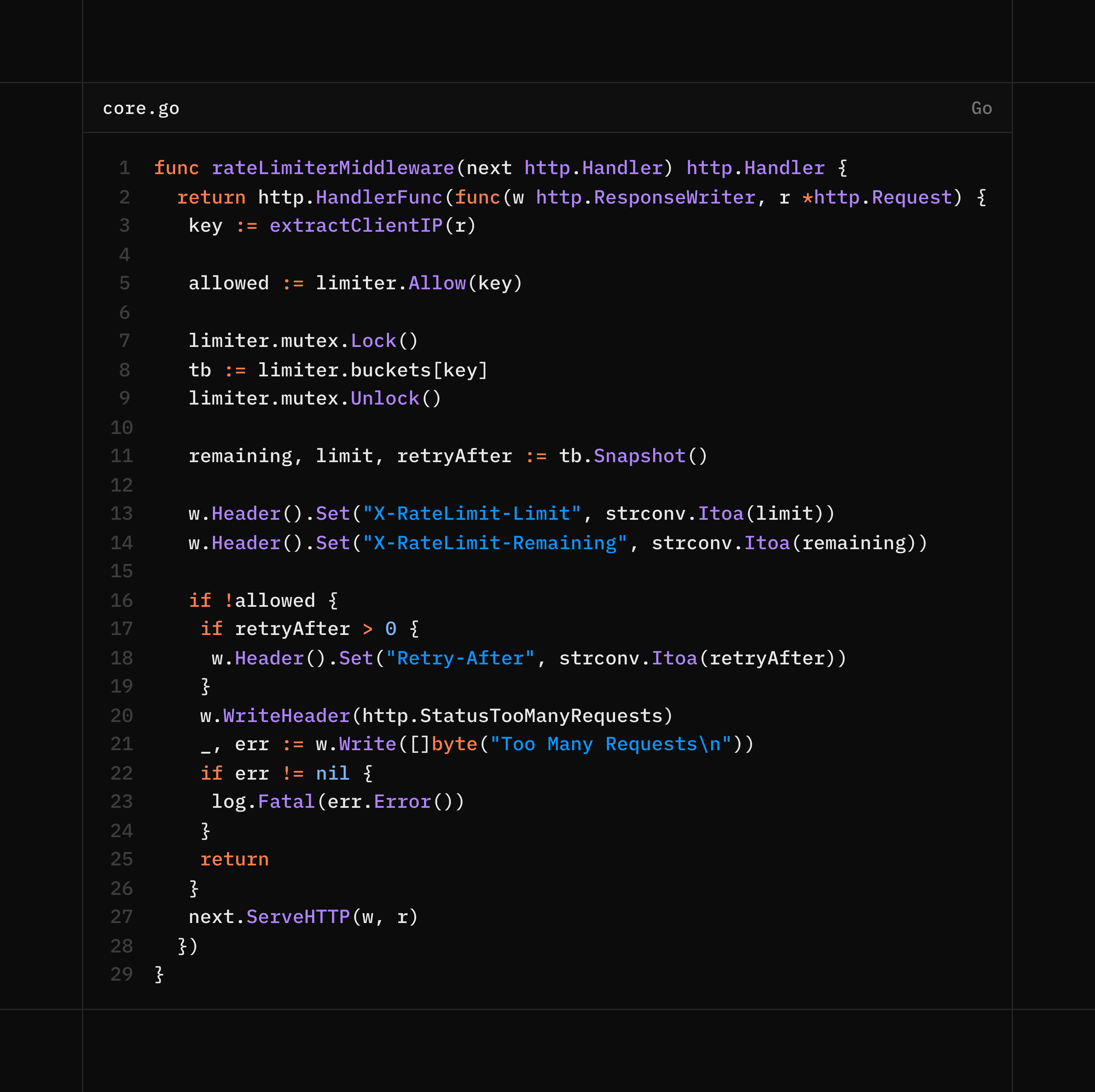
Sets headers:
X-RateLimit-Limit,
X-RateLimit-Remaining,
Retry-After
4. Methods
Some methods for Token Bucket Struct
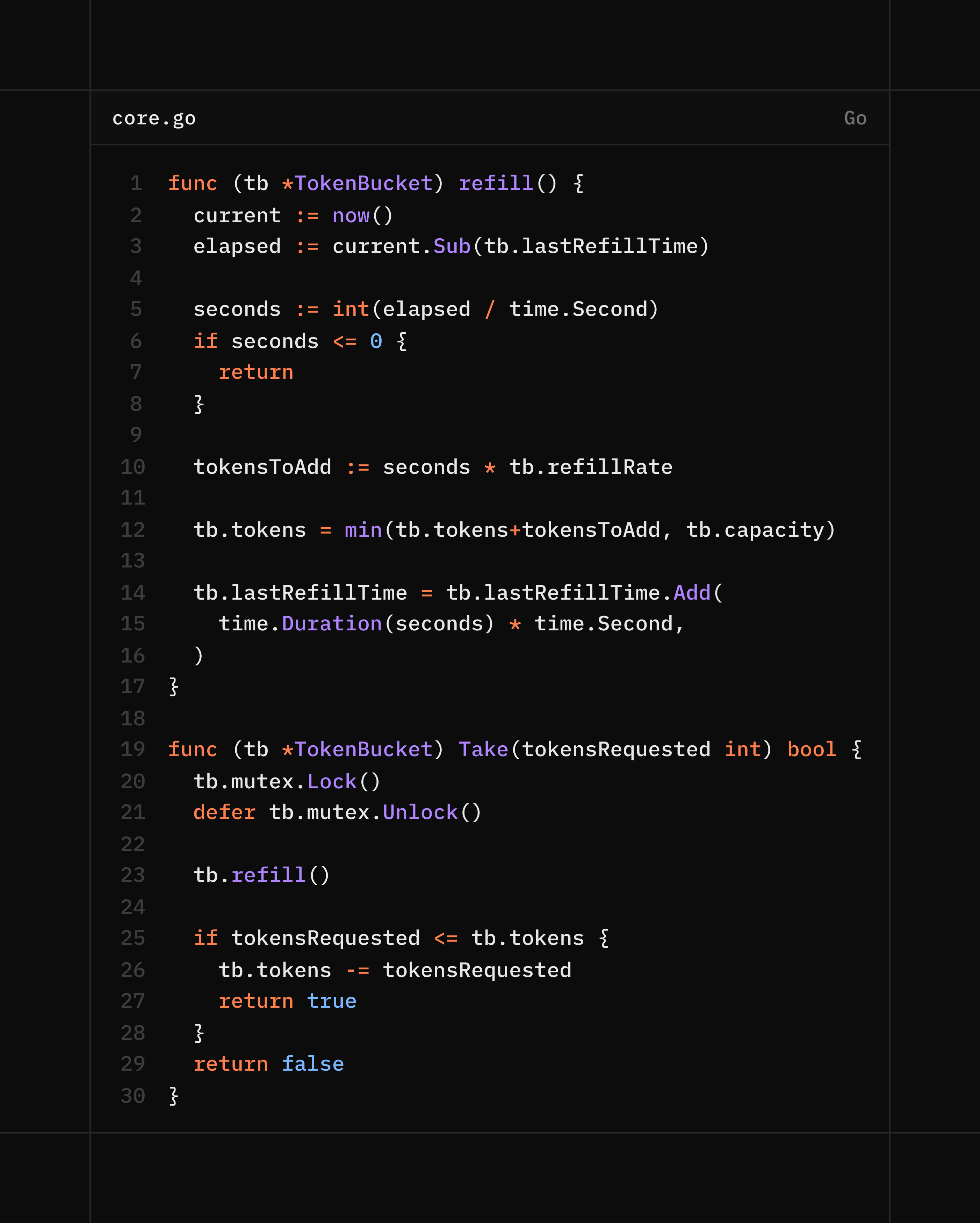
Methods to spend and refill tokens
Refill,
Take,
HTTP Behavior
✓ Allowed Request
HTTP 200 OK
X-RateLimit-Limit: 10
X-RateLimit-Remaining: 7
✗ Rate Limited Request
HTTP 429 Too Many Requests
Retry-After: 1
X-RateLimit-Limit: 10
X-RateLimit-Remaining: 0
Advantages
- • In-memory and fast
- • Per-client isolation
- • Fine-grained locking
- • Deterministic refill
- • Clean HTTP semantics
Limitations
- • Single-node only
- • Resets on restart
- • IP-based
When to Use This
Never (you have better options 😆)
Final Note
This project is intentionally simple. If you understand this deeply, you understand the foundation of most production rate limiters.